fencePOCKET
various locations. 2009-present.
The Challenge:
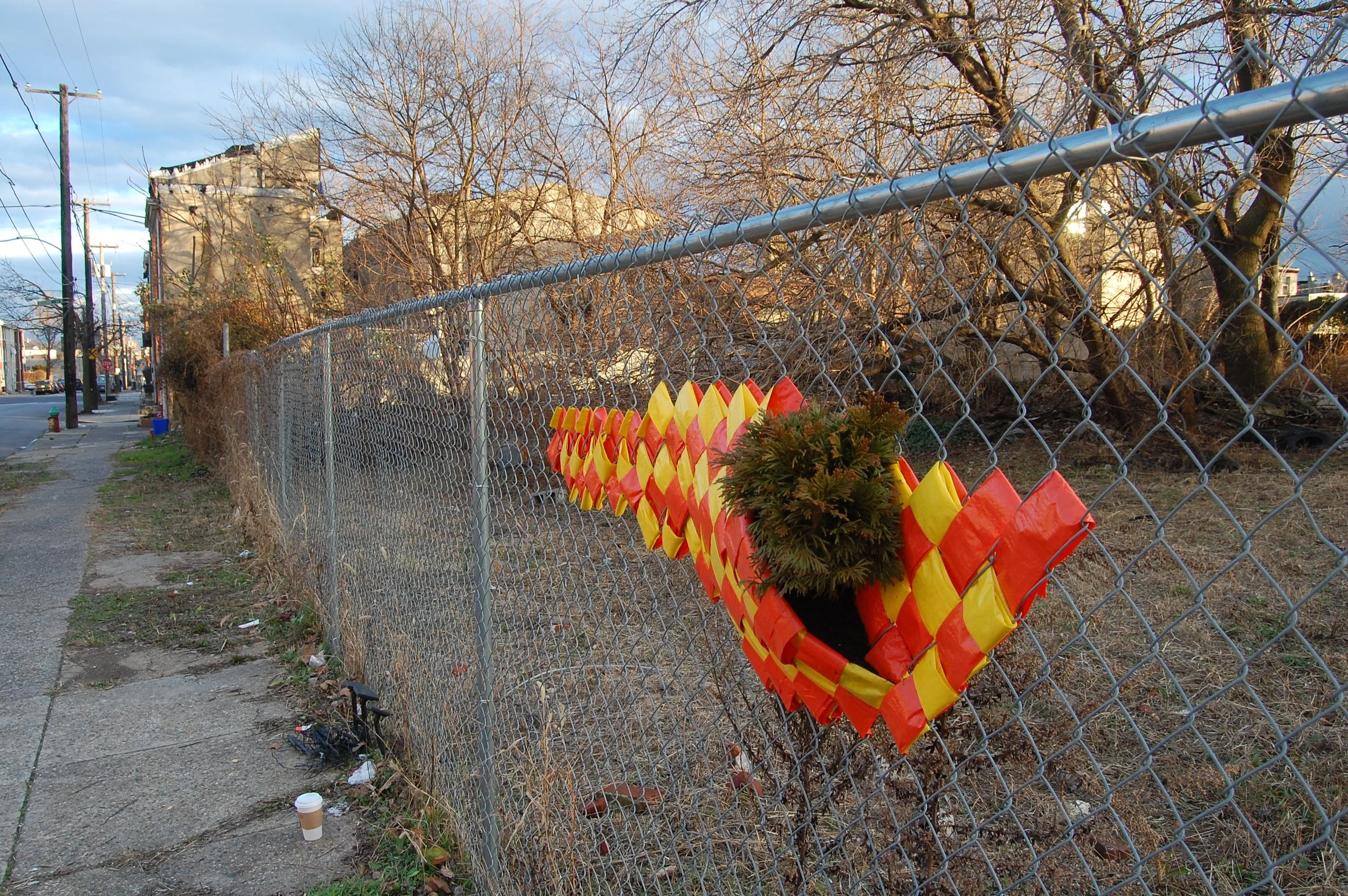
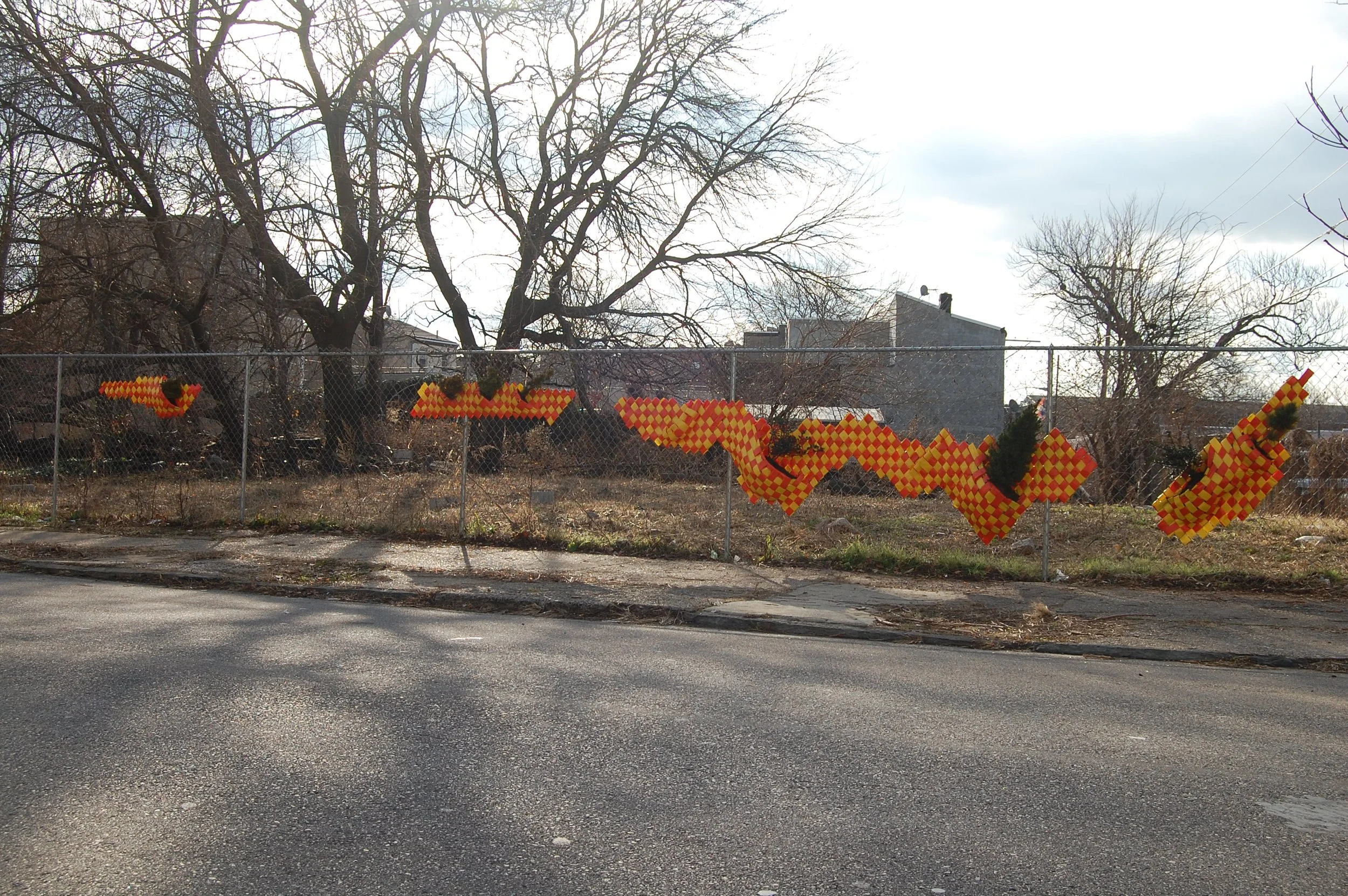
Miles of chain-link fencing define our cities, creating a clear line between public and private land. Over time, however, these fences can bulge and crease from wear, creating deformations that the IDC believes is an opportunity to reclaim stolen space and thicken the line between private property and the public good.
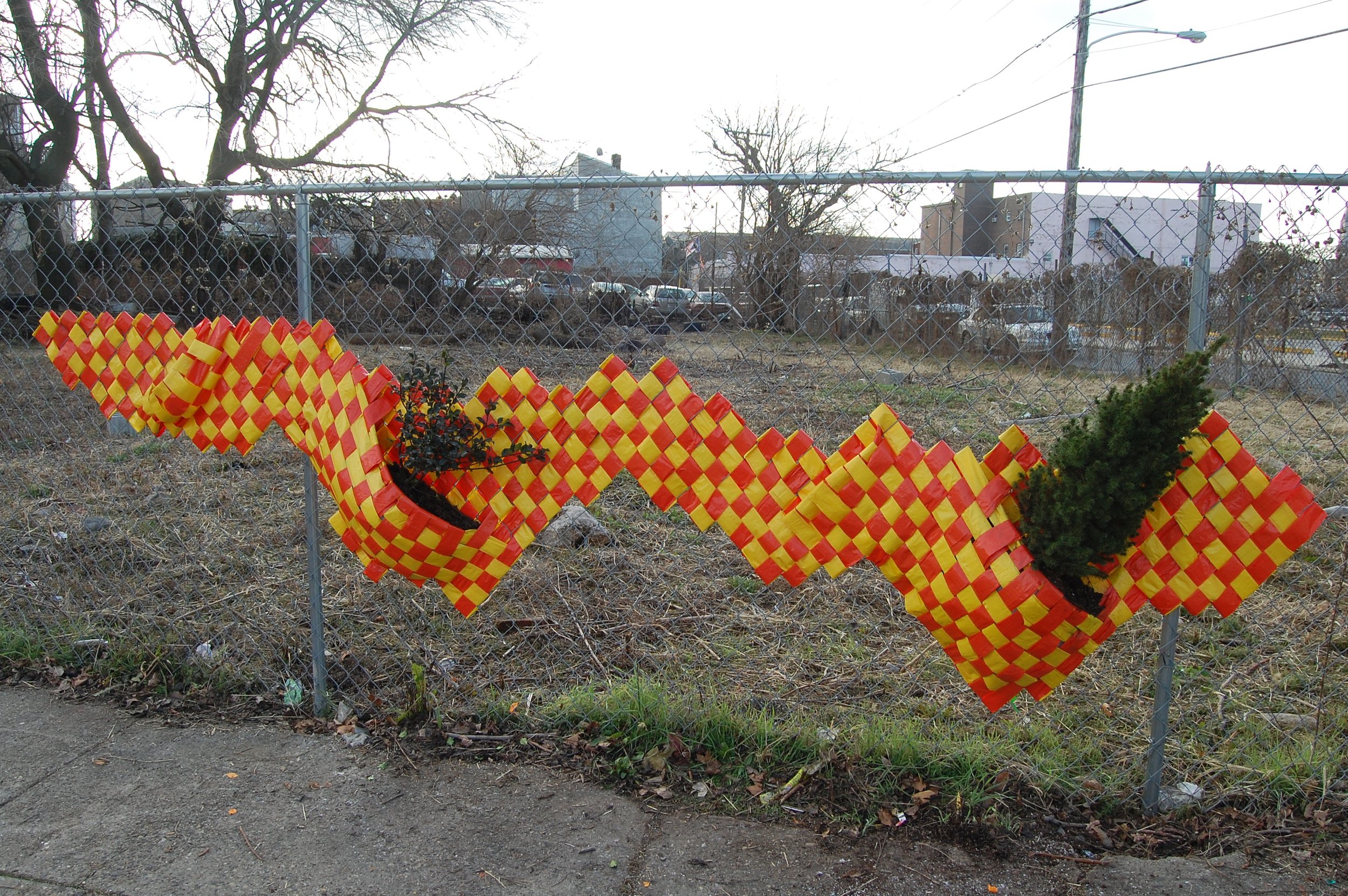
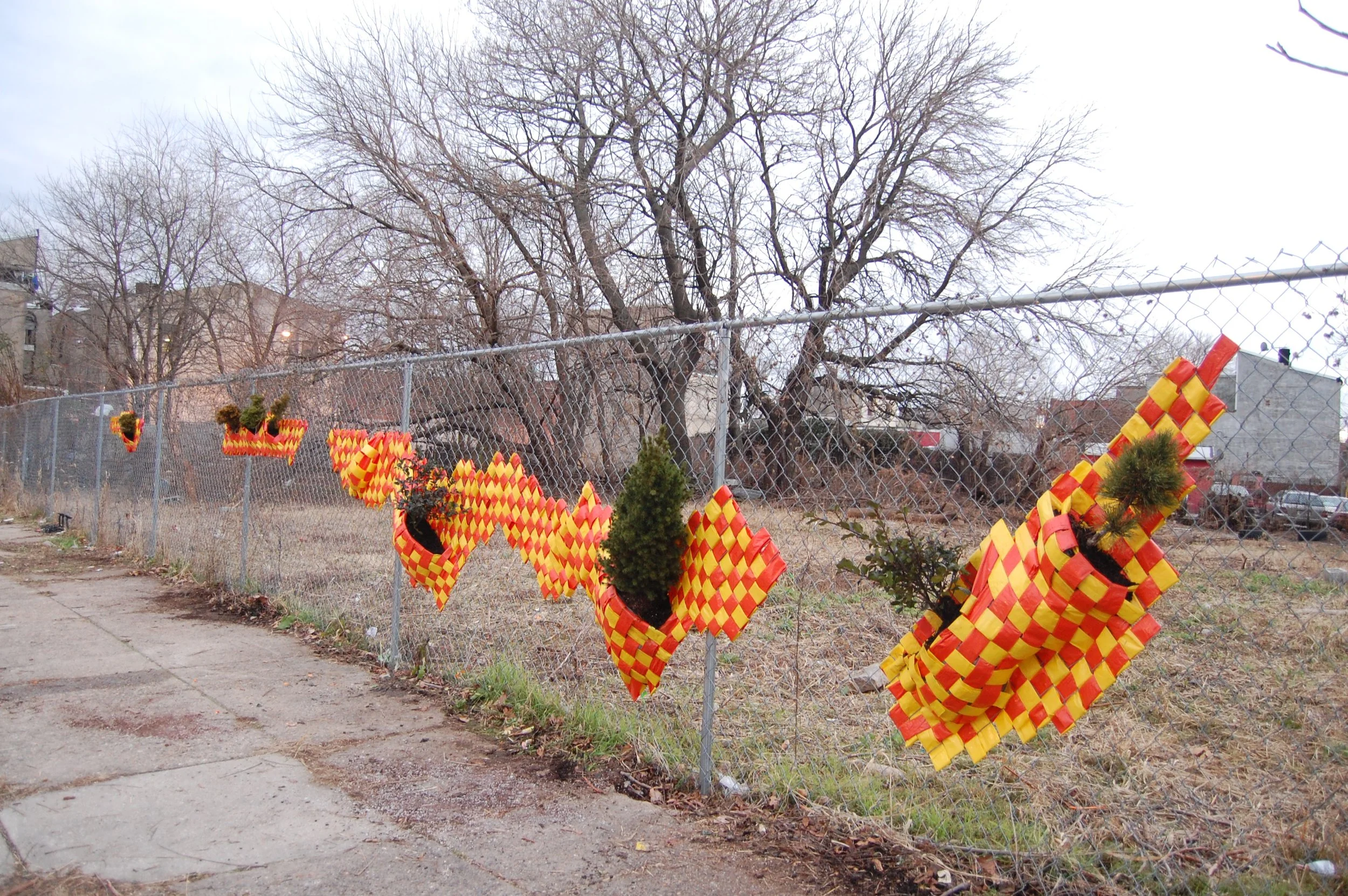
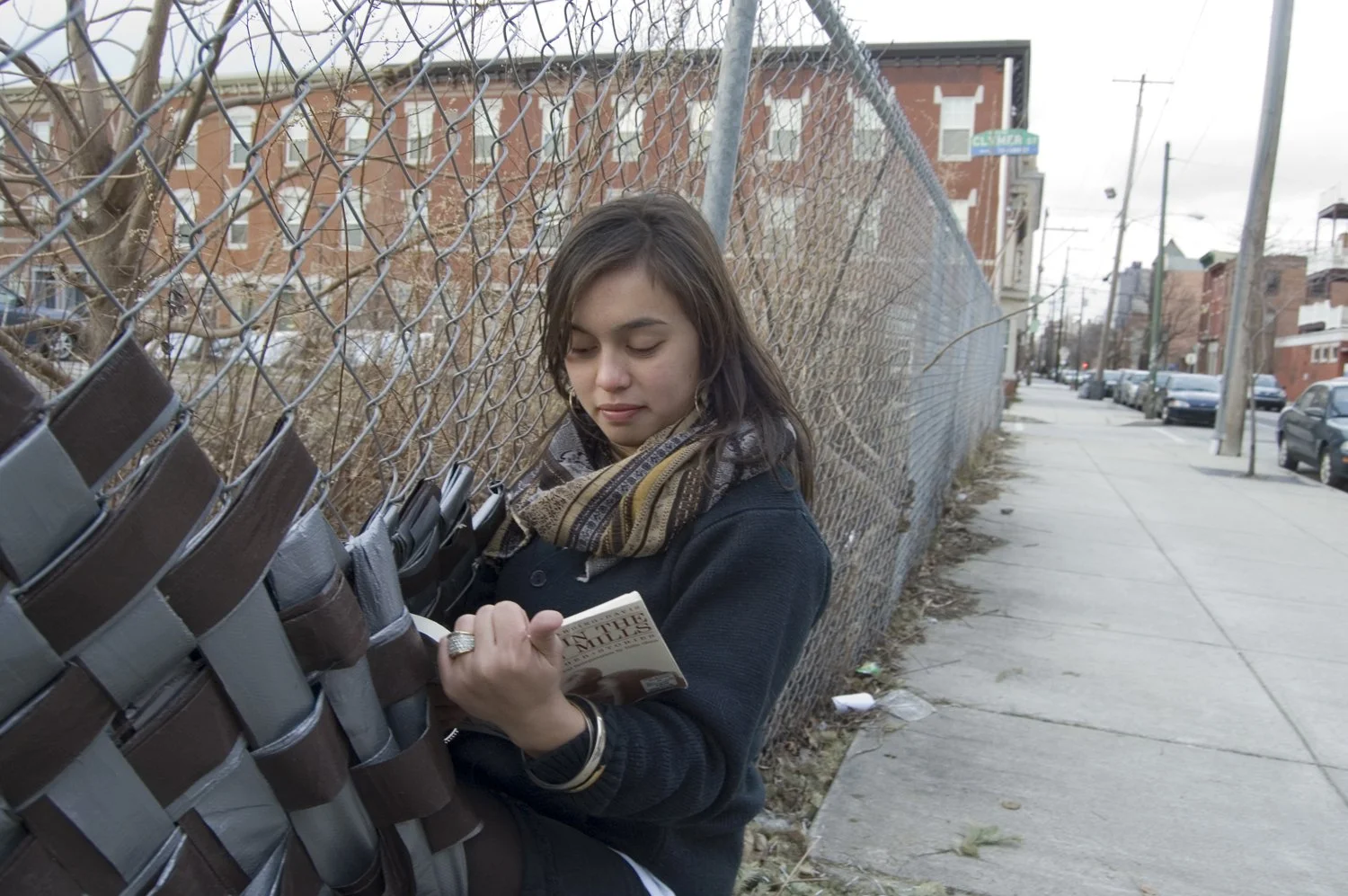
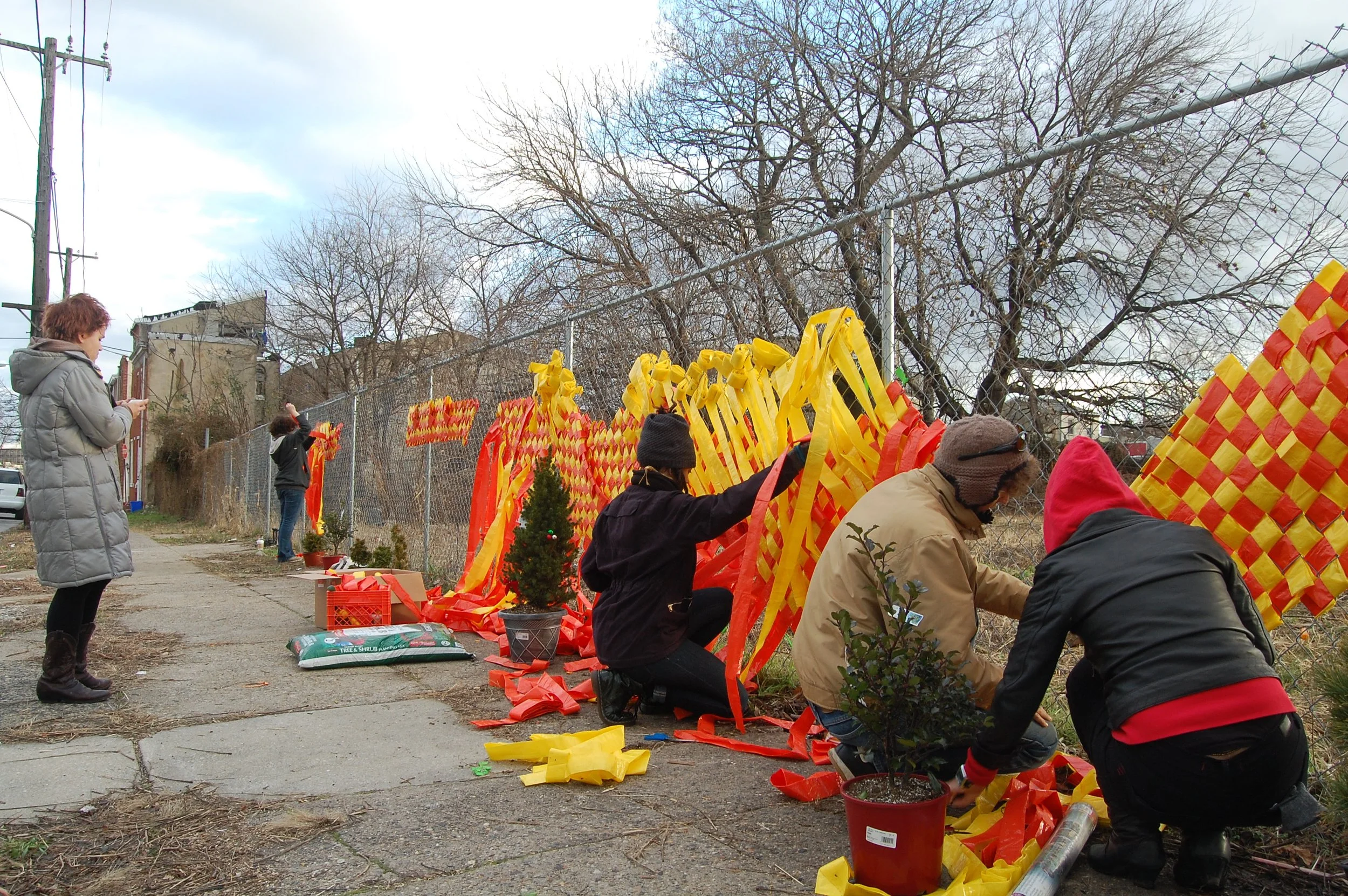
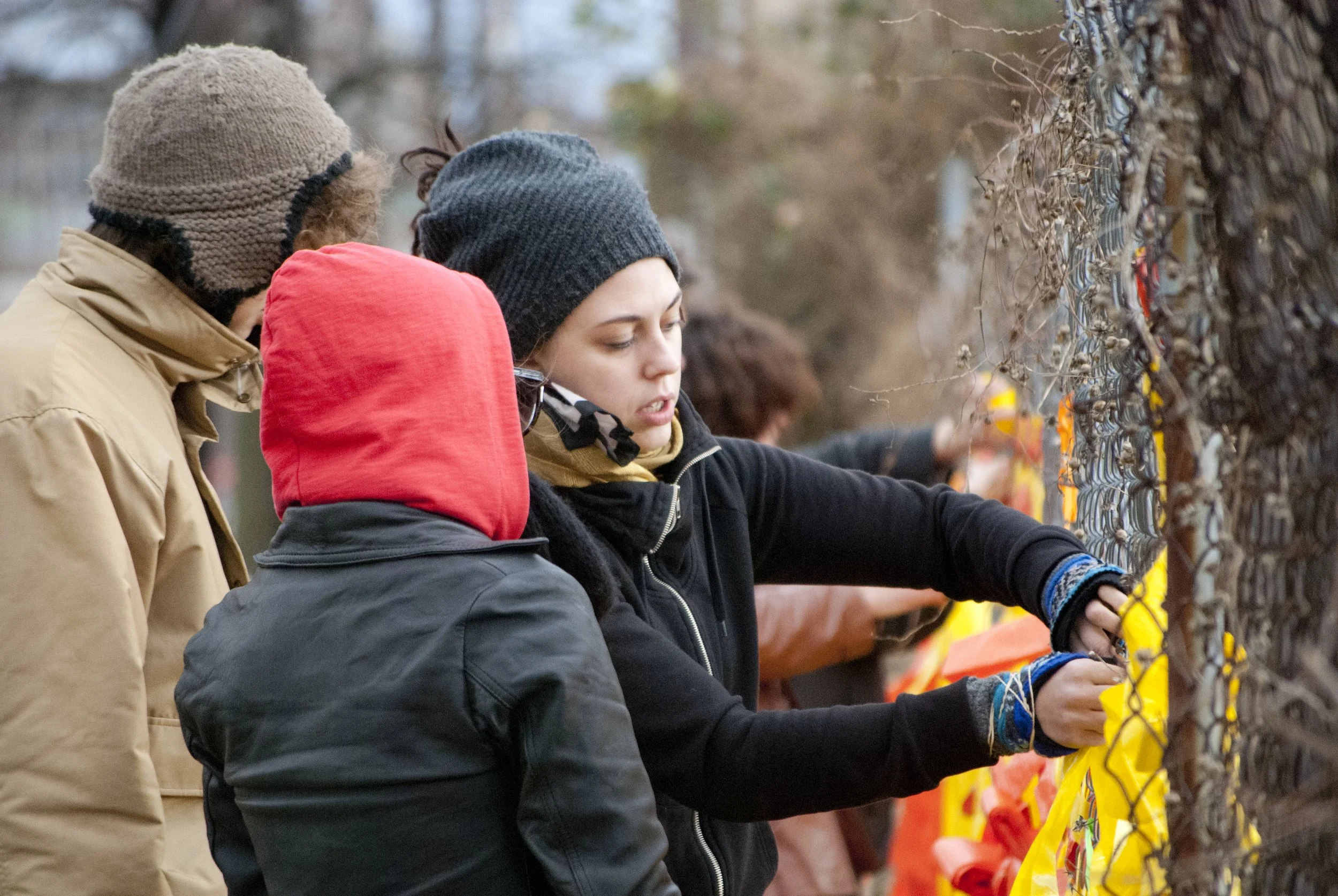
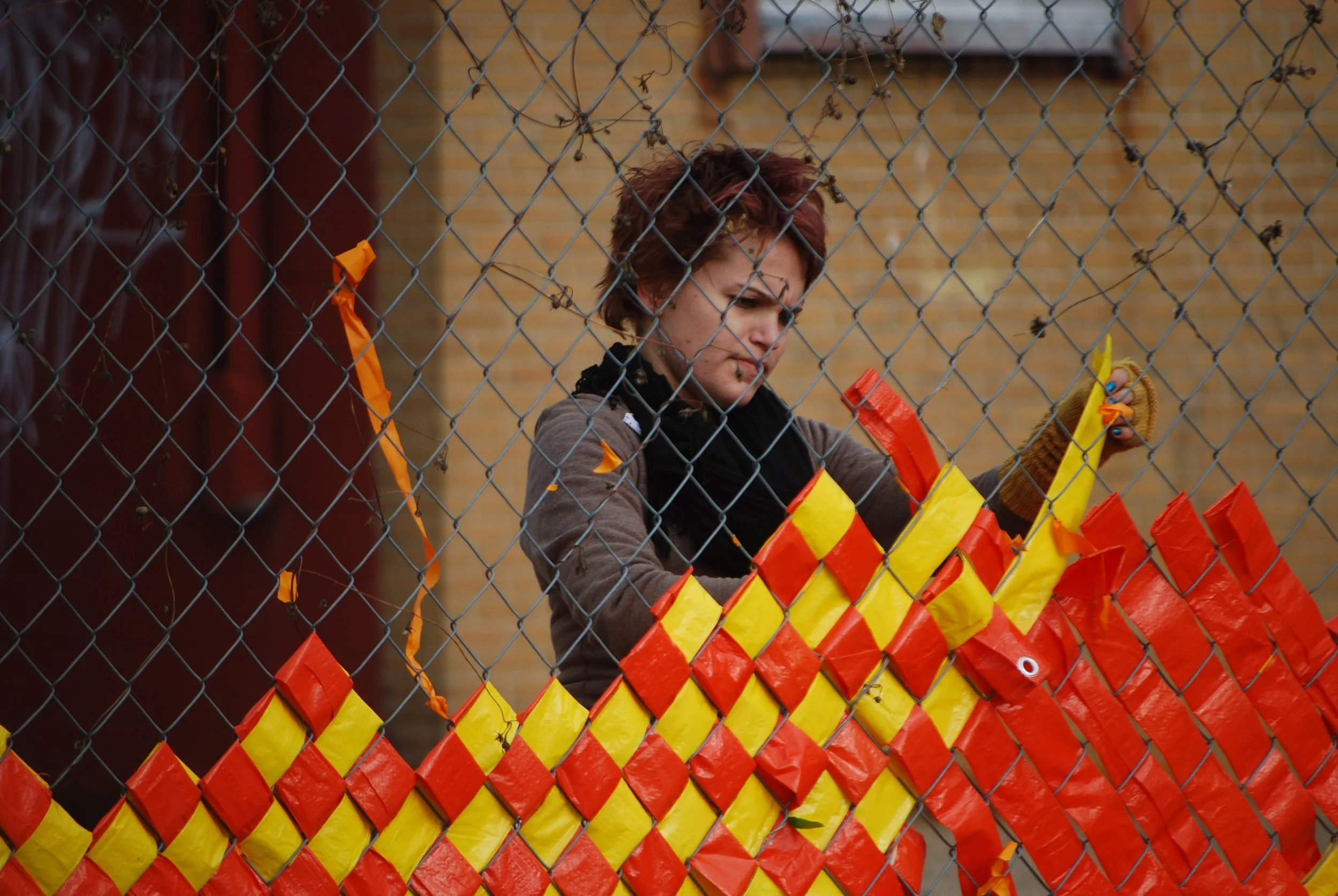
The Intervention fencePOCKET is an open-source construction system that turns fence bulges into functional "pockets" of public infrastructure. Using a simple weave of reclaimed heavy-duty tarp, we tap into the existing structural strength of the fence. Because the intervention exists only within the "deviation" of the fence line, it bypasses traditional trespassing and zoning hurdles.
The Impact The system is infinitely elastic, allowing anyone to transform "wasted space" into:
fencePOCKET_GARDEN: Urban food production in "food deserts”."
fencePOCKET_COT: Immediate, elevated sleeping surfaces for the unhoused.
fencePOCKET_FREE STORE: A neighborhood hub for diverting waste from landfills.
fencePOCKET_PARK: Micro-green spaces in dense concrete jungles.
Learn more
-
Cost: $0 (100% reclaimed tarp and "found" space).
Timeline: 20 days
Volunteers: 14
Size: City-wide
Primary Materials: Reclaimed tarp.
-
The International Design Clinic
smallBIG
-
“Kickin’ Back,” Philadelphia Art Alliance Gallery, Philadelphia, PA (2011)
“Small Architectures, Big Landscapes,” The Sheldon Swope Art Museum, Terre Haute, Indiana, The Design Gallery at Ball State University, Muncie, Indiana, The Goldstein Museum Of Design, St. Paul, Minnesota, The Design Gallery, Central Michigan University, Mt. Pleasant, Michigan, The Design Gallery, University of Wisconsin-Milwaukee, Milwaukee, Wisconsin (2010-2011).
-
The Design Altruism Blog (May 5, 2011)
The Architectural Research Centers Consortium (2011).